Qui joue avec qui ?
Musiciens, compositeurs, producteurs, groupes et membres : suivez les contributions à un album et les liens entre artistes. Pour le classique, explorez aussi les œuvres et leurs mouvements.

LECTEUR AUDIO · BIBLIOTHÈQUE LOCALE
Écouter. Explorer. Préserver.
Spectre & pulsations · Signal synthétique
Exemple fictif · Sélectionnez une relation
CRC32 · 9AC4 D021CRC32 · 9AC4 D021Copie vérifiée. Original intact.
Illustration d’une copie sans conversion
Vos fichiers, vos paroles. Une écoute à votre mesure.
01 / LA CLI
Du premier scan à l’écoute, Aède donne une prise directe sur votre collection. Croisez les crédits, retrouvez vos favoris, enrichissez le contexte et préparez vos fichiers pour la route.
« Comment commencer avec mon dossier Musique ? »
Découvrir les commandes# Tout commence avec votre dossier Musique.
$ aede scan ~/MusicLecture des fichiers… Construction du catalogue… 3 albums 9 pistes 4 artistes Audio et tags inchangés.
Vos dossiers deviennent un catalogue de liens musicaux.
Musiciens, compositeurs, producteurs, groupes et membres : suivez les contributions à un album et les liens entre artistes. Pour le classique, explorez aussi les œuvres et leurs mouvements.
Paroles, biographies, pochettes et portraits complètent votre catalogue à la demande. Comparez une discographie récupérée à votre collection pour repérer les albums manquants.
Retrouvez un titre, une parole ou une note. Combinez années, genres, formats, étoiles et rôles musicaux dans une requête, puis exportez la sélection en M3U, CSV ou JSON.
Favoris, étoiles, tags et notes Markdown restent séparés des fichiers audio. Vos collections enregistrées se mettent à jour selon leurs critères ; l’historique garde la trace de vos écoutes.
check contrôle les sommes intégrées aux trames FLAC et aux pages Ogg. Les copies identiques peuvent être relues et comparées ; après conversion, Aède vérifie la structure et la durée.
Dans le Terminal ou via le flux PCM natif, Aède contrôle le MD5 de l’audio FLAC décodé avant tout traitement, sans modifier vos fichiers.
Validation à la fin du décodage, si une somme est présente. Voir le parcours du MD5.Lancez aussi une analyse avecanalyze ou importez un rapport FlacCompagnon pour retrouver ses mesures dans les détails des pistes.02 / LE SERVEUR
Le serveur local expose le catalogue aux clients et centralise les tâches de scan et de récupération d’informations.
API, comptes et HTTPS disponibles
Deux façons de démarrer : la CLI pour vos scripts, ou l’application Aède pour ajouter vos dossiers et lancer un serveur HTTPS local relié à Phémios.
Version 0.6.1 en préparation · téléchargements CLI et App séparés à la publication.
Découvrir l’application serveurUne clé par application. Navigation et lecture FLAC vérifiées avec Submariner sur macOS ; compatibilité à vérifier selon le lecteur.
Compatible avec




SlimProto, UPnP et OpenHome : premiers profils disponibles, validation sur appareils réels à compléter.
Google Cast™ : profil expérimental côté Aède, avec découverte et lecture des originaux ; validation sur appareil réel à compléter.
Google Cast est une marque de Google LLC.
NAS, Raspberry Pi et lecteurs mobiles : à valider.
Comprendre le serveurCATALOGUE · API LOCALE03 / LE DSP
Sans effets au quotidien, bit-perfect strict pour préserver les échantillons, ou DSP pour ajuster le son. Dans chaque mode, vos fichiers audio restent intacts.
Courbe illustrative · Le fichier original reste intact.
Pour la lecture locale avec la CLI, choisissez le comportement du signal. Sans effets est le mode par défaut.
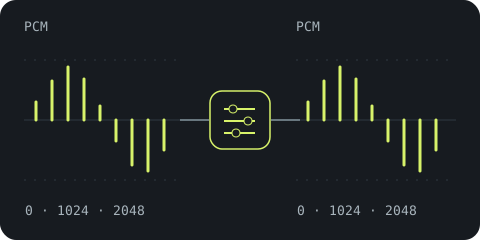
Normalisation désactivée, graves et aigus à plat. Aède privilégie la fréquence source et une représentation exacte des échantillons.
Si la sortie le demande, fréquence, canaux ou précision peuvent être adaptés. Les interventions sont signalées : ce mode ne garantit pas une sortie bit-perfect.
--playback=without-effects
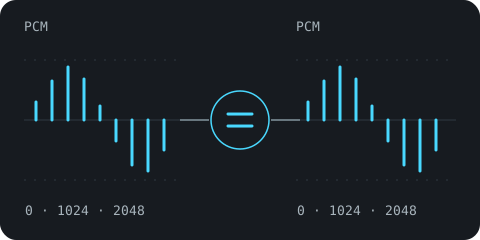
Aucun gain, égalisation, rééchantillonnage, mélange des canaux ou dither. Une source ou une sortie incompatible est refusée.
Premier profil : FLAC natif et WAV PCM entier, 16/24 bits, mono/stéréo. Sortie ALSA directe sur Linux glibc, périphérique à choisir explicitement.
--playback=bit-perfect
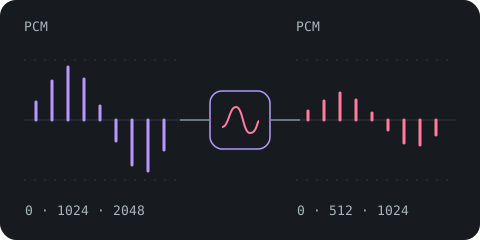
Normalisation par piste ou album, graves et aigus, réserve de niveau et protection de sortie. Le signal change ; vos fichiers restent intacts.
Choisissez ce mode explicitement ou activez un réglage non neutre. En DSP, la normalisation automatique suit la sélection, sauf désactivation.
--playback=dsp
Bit-perfect : chemin logiciel implémenté et testé. Compilation et essais du backend sur Linux réel, puis comparaison d’une capture numérique, restent à réaliser. macOS et Windows sont actuellement refusés en mode strict.
Schémas synthétiques. Les trois modes concernent la CLI locale ; les clients réseau suivent leur propre chaîne de lecture.
Choisir un mode et une sortieReplayGain et Opus R128, puis les mesures de sonie et de crête vraie de FlacCompagnon quand elles sont disponibles. Le mode album conserve les écarts de niveau entre ses pistes ; le mode piste convient aux sélections mélangées.
Les graves et les aigus travaillent sur le signal décodé, avec une réserve de niveau pour les hausses de gain. Les étapes actives, les crêtes et les interventions de la protection de sortie sont indiquées.
En mode DSP, le signal est converti si la sortie demande une autre fréquence. La quantification vers une sortie entière utilise du dither. Le spectre décrit le PCM transmis, sans mesurer le signal physique du DAC.
Le MD5 porte sur l’audio original décodé, avant toute conversion ou correction. Le DSP peut ensuite modifier le son sans modifier cette référence.
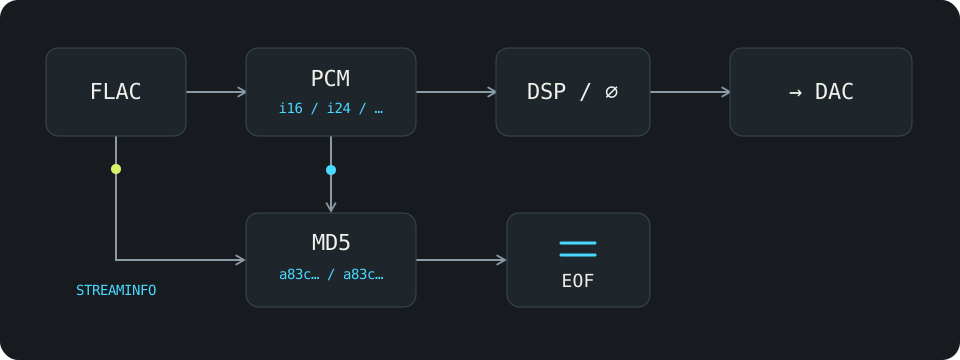
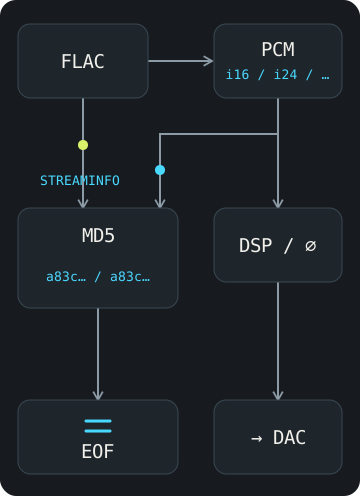
Un MD5 concordant vérifie la cohérence de la source décodée. Il ne prouve pas que le mélangeur système, le pilote ou le DAC a conservé les échantillons. WAV et MP3 ne portent pas cette signature FLAC.
La commande check contrôle séparément la structure et les sommes du conteneur FLAC/Ogg ; elle ne décode pas l’audio pour vérifier ce MD5.
Des pistes de développement progressives.
Périmètre, financement et calendrier à définir.
Choisir fréquence, gain et largeur de chaque filtre. Combiner corrections en cloche, plateaux et filtres passe-haut / passe-bas, avec préréglages et désactivation individuelle.
Conserver des réglages différents pour un casque, des enceintes ou une sortie. Importer, exporter et identifier clairement le profil utilisé pour l’écoute.
Appliquer des filtres issus de réponses impulsionnelles fournies par l’utilisateur. Une base pour des corrections personnalisées, avec maîtrise de la latence et des transitions.
Toutes les fonctions Premium ci-dessus sont envisagées. Leurs priorités et leur disponibilité restent à confirmer.
04 / L’INTERFACE GRAPHIQUE
L’interface d’Aède.
Un projet client, un même univers musical.Nom de travail · Concept à développer
Phémios est un aède de l’Odyssée, qui chante dans le palais d’Ulysse, à Ithaque. Un nom pour donner un visage à Aède.
ALBUM · 2024
LES LIENS DE VOTRE COLLECTION
VOTRE SÉLECTION
Typographie sobre · Mesures en monospace · Mouvements courts · Sources visibles
LA SUITE S’ÉCRIT ENSEMBLE.
Recevez les nouvelles d’Aède et l’annonce du futur lancement Kickstarter.
Un e-mail par mois maximum. Aucun spam.
Désinscription sur simple réponse.